
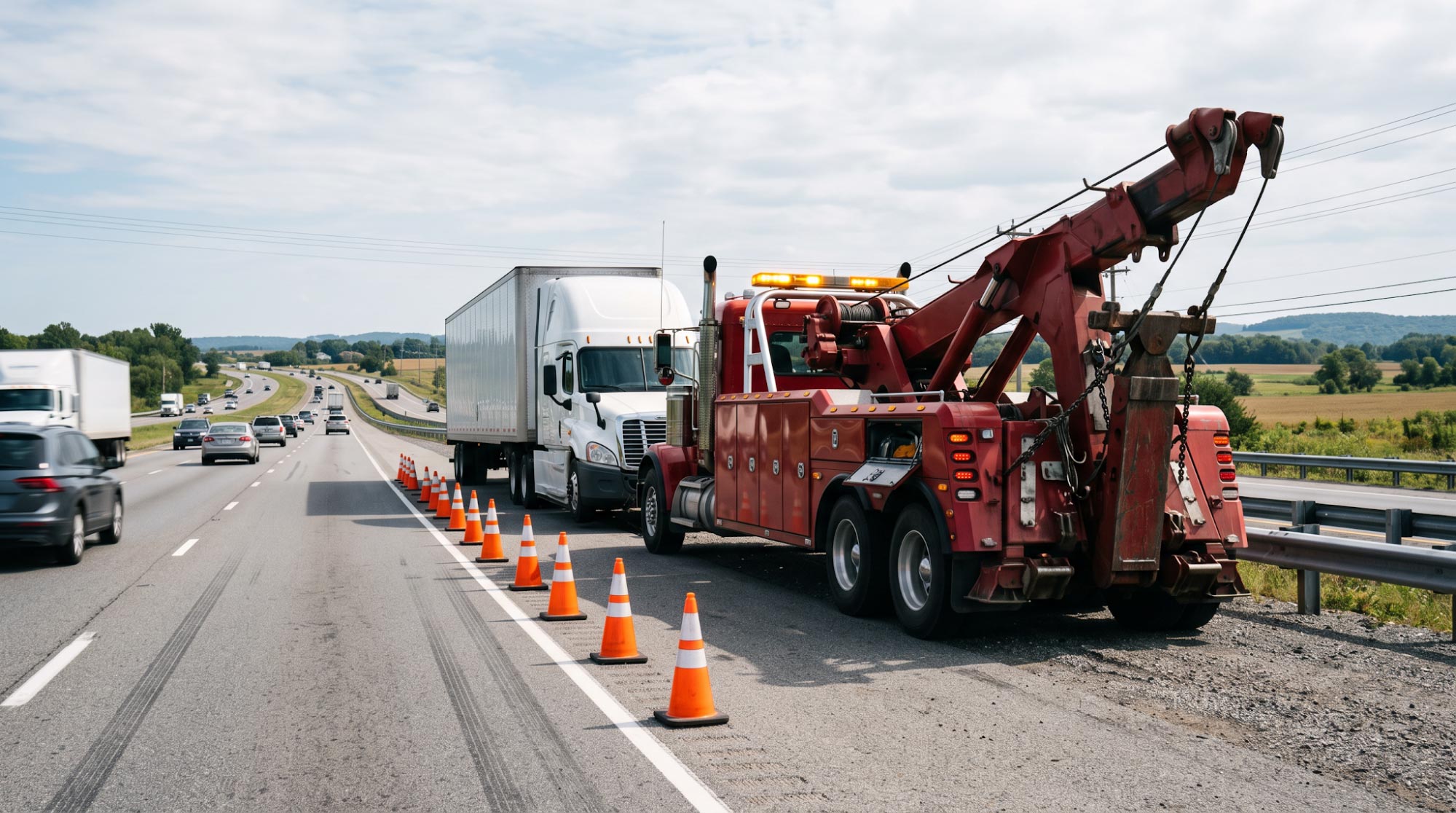
Heavy duty towing in St. Joseph, MO requires specialized recovery rigging, precise axle isolation, auxiliary air brake control, and tactical roadside barrier positioning to safely move multi-ton commercial vehicles without causing secondary mechanical damage or endangering highway personnel.
Executive Summary: Commercial vehicle recovery across Northwest Missouri demands strict mechanical isolation and active incident containment. When heavy rigs or commercial fleets face breakdowns along Interstate 29 or US Highway 36, rapid deployment of high-capacity wreckers protects cargo, equipment, and motorists. Understanding the core technical steps of heavy recovery ensures business fleets minimize downtime while maintaining strict highway safety standards.
📌 Key Takeaways (TL;DR)
Rigorous Mechanical Isolation: Disconnecting the drive shaft or pulling rear axle shafts is mandatory to prevent catastrophic transmission failure during transit.
Tactical Incident Shielding: Angling high-capacity heavy wreckers creates an impenetrable physical work zone barrier against oncoming highway traffic.
Direct Pneumatic Integration: Supplying auxiliary air from the wrecker releases emergency spring brakes and grants synchronized stopping control across both vehicles.
Key Questions Answered:
What makes heavy duty towing distinct from standard towing?
Heavy towing uses high-capacity boom systems, industrial under-reach attachments, and dedicated auxiliary air hookups specifically engineered for multi-ton commercial trucks, buses, and motorhomes.
Why must a commercial truck drive shaft be disconnected?
Automatic and heavy transmissions rely on a running engine for internal fluid circulation; towing with turning wheels while the engine is off destroys transmission gears rapidly.
The Demands of Commercial Heavy Vehicle Recovery
Navigating major logistics corridors like Interstate 29 and US Highway 36 around St. Joseph, MO involves intense freight traffic and unpredictable Midwestern weather. When a loaded semi-truck, tour bus, or construction rig experiences a sudden mechanical failure or roadway incident, standard towing methods fall short. Commercial recovery operations demand heavy-duty wreckers fitted with hydraulic booms, high-tonnage winches, and reinforced chassis capable of stabilizing immense dynamic loads.
The immediate challenge during any commercial roadside incident is securing the scene. Heavy vehicle recovery teams establish calculated safety buffers immediately upon arrival. By positioning a heavy wrecker at a deflection angle upstream from the disabled rig, operators establish a protective barrier that shields both technicians and stranded motorists from active traffic lanes.
Critical Mechanical Preparation in Practice
Safely transporting commercial vehicles requires disciplined mechanical steps before moving an inch. Rushing a recovery without proper pre-trip isolation can lead to expensive secondary mechanical damage.
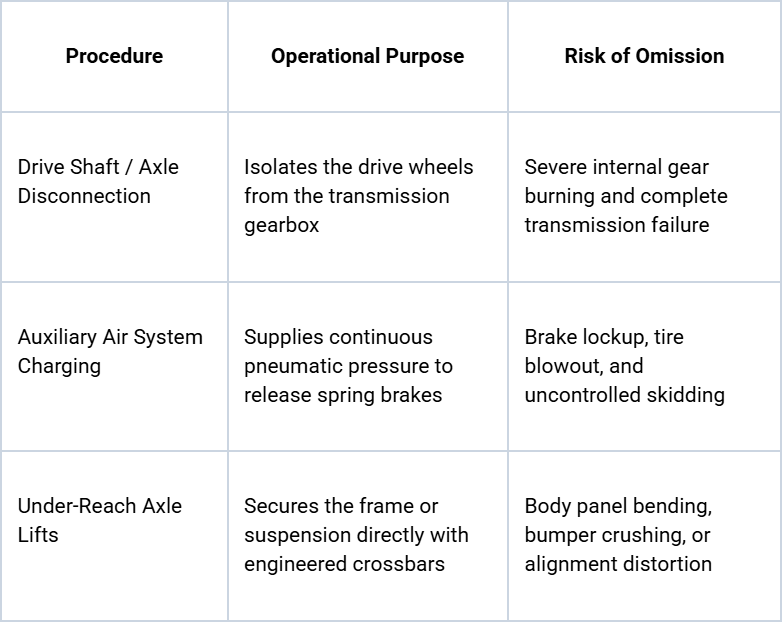
Technicians must also inspect the ground stability prior to extending outriggers. Soft shoulders or wet soil require wide timber blocking under each outrigger pad to distribute massive ground pressure evenly, preventing equipment tilting during heavy winch pulls.
Tailored Solutions for Diverse Fleet Needs
Every recovery situation presents unique mechanical and environmental variables. Professional recovery teams tailor their equipment configuration based on exact vehicle specifications:
- Commercial Tractor-Trailers: Heavy-duty tandem-axle towing with load securement and air brake tie-ins for long-distance transport.
- Motorhomes & Tour Buses: Specialized low-profile under-reach forks and extended reach booms to protect fiberglass body panels and delicate overhangs.
- Construction Equipment & Straight Trucks: Heavy winching, off-road recovery rigging, and secure transport designed for extreme gross vehicle weight ratings.
Why Choose Cornelius Heavy Wrecker in St. Joseph, MO
When fleet managers and drivers face breakdowns or ditch extractions across St. Joseph, MO and surrounding regional highways, Cornelius Heavy Wrecker provides dedicated 24/7 heavy-duty towing and recovery. Equipped with modern heavy wreckers, certified recovery professionals, and comprehensive roadside solutions—from fuel delivery and battery assistance to complex winching and heavy hauling—the team ensures every vehicle is protected from scene to destination.
Frequently Asked Questions
What details should dispatch have when calling for heavy towing?
Provide the exact location, vehicle make and model, estimated gross weight, whether the vehicle is loaded, and whether the wheels roll freely or are locked.
Can heavy wreckers tow fully loaded commercial semi-trucks?
Yes. Heavy wreckers are specifically rated with high-capacity booms and dual-axle stabilization designed to haul fully loaded tractor-trailers safely.
How does auxiliary air protect the towed vehicle?
Auxiliary air lines run directly from the wrecker into the disabled truck’s air brake tanks. This disengages the emergency spring brakes and allows the wrecker operator to control braking smoothly.
Conclusion
Commercial roadside emergencies require disciplined execution, heavy-duty machinery, and uncompromising safety standards. By following proven mechanical isolation protocols and rigorous site control, heavy recovery specialists safeguard both valuable commercial equipment and public roadways. Cornelius Heavy Wrecker stands ready around the clock to deliver dependable heavy-duty towing in St. Joseph, MO, getting your commercial assets safely back on track.
